Good Pizza, Great Pizza
- 4.7
- Rating
- 100.00M
- Installs
- Free
- Price
 Analysis by App-foxy
I keep coming back to Good Pizza, Great Pizza for a simple reason: it turns making a pizza into a surprisingly readable little routine. I take an order, interpret what the customer actually wants, prepare the pie, bake it, cut it, and hand it over. The actions are easy to understand, but the satisfaction comes from trying to make each order cleaner and more accurate than the last one.
That makes this a casual cooking game rather than a serious restaurant simulator. It is free to play, suitable for Everyone, and made by TapBlaze. Its broad appeal is easy to understand: the game has a 4.7 average from around 1.8 million ratings and has passed 100 million installs. Those figures match my impression that it is designed for short, approachable sessions rather than demanding, uninterrupted play.
The important question is not whether the premise sounds pleasant. It is whether the repeated work of preparing pizzas stays enjoyable after the novelty fades. In my experience, the answer is mostly yes, provided you like games built around observation, timing, and small improvements. If you want deep cooking simulation, intense competition, or a completely hands-off experience, this is probably not the right choice.
You May Also Like

 AccuWeather: Weather Radar
AccuWeather Review: A Quick, Clear Forecast for Everyday Decisions
For everyday plans, the best forecast is the one you can understand quickly. AccuWeather makes rain timing, radar, and local conditions easy to act on, with a few trade-offs.

 Hill Climb Racing
Why Hill Climb Racing Still Turns Crashes Into One More Run
A tiny car, a bumpy hill and one more upgrade: Hill Climb Racing keeps resurfacing because its simple chaos makes every near-miss feel personal.

 AliExpress - Shopping App
AliExpress Makes Global Shopping Feel Personal, but Shoppers Bear the Risk
AliExpress turns a global marketplace into a pocket-sized discovery engine. Its reach is useful, its shopping loop compelling, and its trade-offs easy to miss.

 Lords Mobile: Kingdom Wars
Lords Mobile Is a Kingdom-Building Routine, Not a Quick Match
A case-by-case verdict on the building, battles, device demands, and social commitments that make Lords Mobile rewarding for some players and exhausting for others.

 PDF Scanner app - TapScanner
TapScanner Makes Paperwork Easier to Capture, Check, and Share
TapScanner makes scanning with a phone feel less like a rescue operation and more like a dependable step in getting work done. Its capture tools are useful, though not flawless.

 Block Blast!
 Shows How Much a Puzzle Game Can Leave Out
A quiet grid game shows why puzzle players increasingly value instant clarity, repeatable skill and low-pressure play—and where the genre still needs to catch up.
More From Our News Desk
View All News


From reading the order to making the first pizza
The first action is not tapping the oven. It is reading the customer carefully. Orders can be expressed in ordinary language, and the challenge is often translating that request into the correct preparation. I have found that rushing this step causes more mistakes than slow hand movements do. A quick glance can turn a simple order into an incorrect topping choice, uneven coverage, or the wrong division of the pizza.
That design gives the game a useful twist. It is not only about remembering a recipe from a menu. I have to listen for details, separate what belongs on the whole pizza from what belongs on one side, and notice whether the customer is asking for a particular style of preparation. The screen may look calm, but my attention is already being tested before I touch the ingredients.
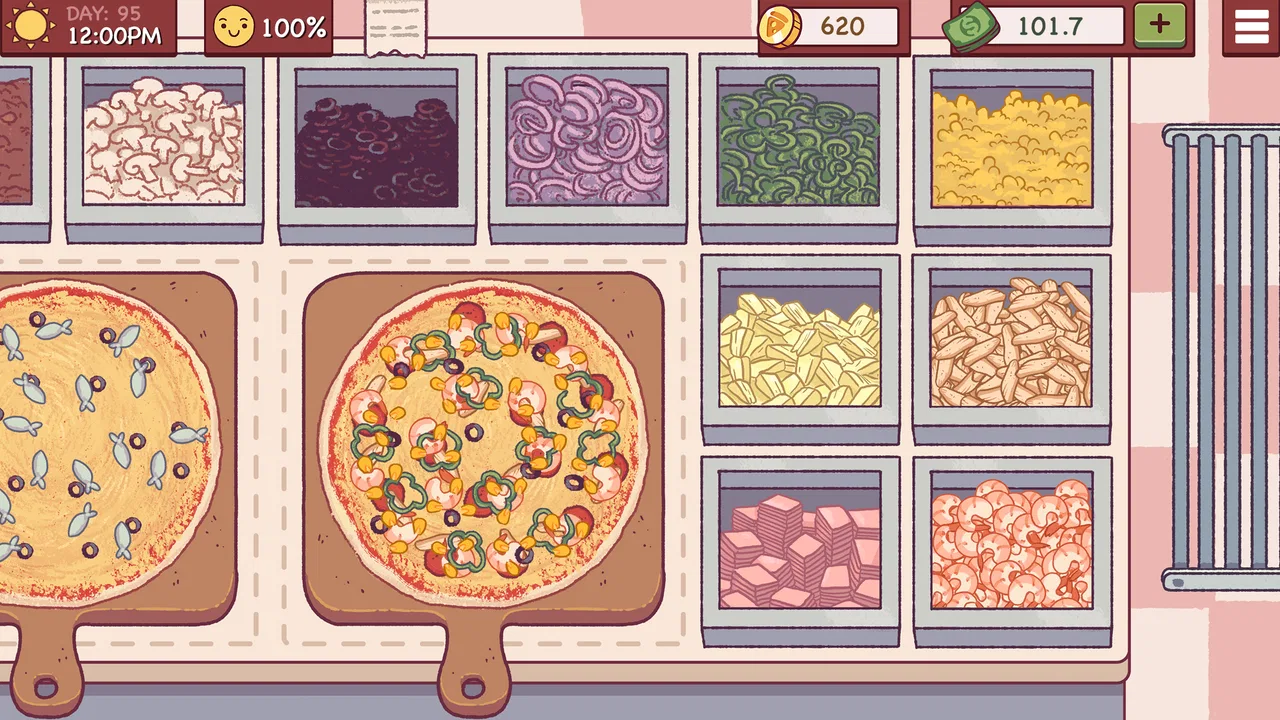
Once I understand the request, the preparation feels tactile without becoming complicated. I add the base, place toppings, send the pizza through the oven, and finish it for delivery. Each stage is short enough to learn quickly, yet distinct enough that a mistake has a clear source. If the order is wrong, I can usually tell whether I misread the customer, applied too much, baked carelessly, or rushed the finishing step.
That clarity is one of the game’s strongest qualities. Many casual cooking games turn into a blur of timers and icons. Here, the central task remains recognizable: make the pizza the customer described. The game gives me room to develop a personal rhythm instead of demanding complicated controls.
Why careful reading matters more than fast tapping
A useful habit is to pause mentally after each order and convert it into a checklist. I identify the sauce and cheese expectations, note the toppings, check whether the request is divided into halves or sections, and only then begin. This takes almost no extra time, but it reduces the kind of error that leads to wasted ingredients and an unhappy customer.
I also avoid treating every order as if it deserves the same speed. Straightforward pizzas can be prepared quickly, while unusual requests deserve a slower read. That trade-off is important: moving faster feels efficient, but accuracy protects the reward at the end of the interaction. The best runs are not frantic. They are controlled.
This is where the game differs from a typical match-three or idle title. The input is simple, but the player’s interpretation matters. I am not merely waiting for a result or matching identical pieces. I am making a sequence of small decisions, and the game immediately shows whether those decisions worked.
The feedback rhythm keeps each order understandable
After preparation comes the feedback rhythm: customer reaction, earnings, and the sense that the day has moved forward. I like that the result is connected to what I just did. A well-prepared pizza feels like a direct consequence of paying attention, while a poor result encourages me to inspect my process instead of blaming random difficulty.
This rhythm creates a compact emotional cycle. I read, act, receive a response, and adjust. The reward is not only the money or progress shown after an order. It is also the information contained in the response. I learn whether my interpretation of the request was sound and whether my execution matched it.
That makes failure relatively useful. A disappointing customer is frustrating, especially when I thought I had followed the order, but the setback is small enough that I want to try again rather than quit. The game does not need a dramatic punishment to make accuracy meaningful. The immediate change in the customer’s reaction is enough.
There is also a pleasant contrast between the calm presentation and the mental concentration underneath it. The visuals and controls make the game approachable, but the order text can make me slow down. I can play casually, yet I still feel a small sense of responsibility for the shop’s results.
Reward without turning the game into a race
The reward structure works best when I view it as feedback on consistency. A good order supports the shop and makes the next customer feel like a fresh opportunity. I do not need to chase a perfect score every time to enjoy the game. In fact, trying to maximize speed can make the experience worse because it encourages careless reading.
This is a helpful distinction for different players. Someone who enjoys optimizing every action may appreciate the challenge of reducing mistakes and improving efficiency. Someone who wants a relaxing activity can focus on completing orders at a comfortable pace. The same pizza-making loop supports both approaches, although the first player will probably notice more pressure in difficult requests.
There is a practical limitation here. The reward can feel less exciting if I am not invested in gradual shop progress. The individual payout is not the same as the excitement of unlocking a new competitive rank or defeating an opponent. Players who need constant novelty may find the routine repetitive, while players who enjoy incremental improvement will likely find it soothing.
Three habits that make the loop more satisfying
- Read the entire order before touching the ingredients. This prevents a fast start from creating a slow correction later.
- Use the pizza’s divisions as a planning tool. When a request separates toppings, I treat the halves as separate jobs instead of spreading ingredients first and trying to repair the layout.
- Judge mistakes by their stage. If the topping is correct but the customer is unhappy, I reconsider baking, cutting, or the amount applied rather than changing the whole recipe blindly.
These habits are not complicated secrets, but they change how I play. They turn each order into a small workflow with a beginning, a check, and a final review. That is more useful than simply tapping faster.
Why the next session begins after the day ends
The reset is central to the game’s appeal. A working period ends, the immediate pressure disappears, and I get a natural stopping point. That structure suits a phone game because I can finish a handful of orders, put the device down, and return later without needing to remember a complicated battle state or a long chain of objectives.
When I start again, the loop feels familiar but not entirely empty. I know the basic actions, yet I still have a reason to improve: interpret orders more accurately, avoid waste, and handle the next set of requests with a smoother rhythm. The reset does not erase the value of the previous session. It gives me a clean space to apply what I learned.
This is also why the game works well in everyday situations. If I have a short break between tasks, I can play a few orders without committing to a long match. If I want a quieter evening activity, I can spend more time refining my process. It is a good fit for the moment when I want interaction but do not want a game that demands constant urgency.
Still, the same reset can expose the game’s limits. If I am looking for a story-heavy adventure with large areas to explore, restarting the restaurant routine may feel too narrow. It is also not ideal when I want a multiplayer session with friends or a competitive leaderboard to dominate. Its pleasure comes from repeating a focused craft, not from changing genres every few minutes.
Free access and the question of purchases
The game is free to download, with in-app purchases ranging from $0.99 to $99.99 per item. That makes it easy to try the core experience before deciding whether it deserves a place in my regular rotation. I would approach the purchase options with the same patience I use for the orders: first learn whether the basic loop is genuinely enjoyable, then decide whether optional spending adds enough value for my own habits.
For a child or younger player, the Everyone rating makes the presentation broadly approachable, but purchase decisions still deserve adult attention. The game is simple to understand, and that can make it easy to keep playing. I would set expectations before handing over a device, especially if it is connected to a payment method.
One practical point is device compatibility. The current version is 5.46.4.1 and requires Android 6.0 or newer. That is useful to check before installing on an older phone or tablet. On a supported device, the game’s casual format makes sense for touch play, but the experience still benefits from a screen large enough to distinguish toppings and pizza sections comfortably.
Who will enjoy it, and who should choose another game
I recommend this game to players who like visible progress, gentle repetition, and tasks that reward attention. It is especially suitable for someone who enjoys cooking themes but does not want a complex simulation with dozens of systems to manage. The orders create enough variation to keep the basic preparation from feeling completely automatic, while the familiar actions make it easy to return after a break.
It can also be a good choice for families looking for an accessible game to discuss together. A younger player can focus on the ingredients and actions, while an older player can help interpret trickier instructions. That shared decision-making is more interesting than simply watching someone tap through a level.
I would skip it if my priority were speed, competition, or realism. Compared with a time-management cooking game, this one feels less like a frantic race against several stations. Compared with an idle restaurant game, it asks me to participate in every order instead of waiting for automated income. Compared with a detailed cooking simulator, it simplifies the physical process and concentrates on customer interpretation.
Those comparisons are not weaknesses by themselves; they clarify the game’s identity. It sits between a puzzle about instructions and a light restaurant routine. The strongest alternative depends on what I want. If I need adrenaline, I would choose a faster service game. If I want a strategic business layer, I would look elsewhere. If I want a calm, hands-on pizza workflow, this is the more fitting option.
Small frustrations worth knowing before installing
The biggest limitation is repetition. The core actions are intentionally familiar, so the game depends on changing requests and gradual goals to maintain interest. Players who dislike doing similar tasks repeatedly may feel that the loop has shown everything important too soon.
Another possible friction point is the gap between understanding an order and executing it perfectly. I sometimes know what the customer wants but still make a small operational mistake. That can be satisfying when I learn from it, but irritating when I am playing casually and only want a relaxing break.
The game also asks for a particular kind of patience. It is not enough to recognize the ingredients; I need to respect the sequence. Someone who taps impulsively may experience more failures than someone who slows down for a second. That is a fair design choice, but it means the game is less effortless than its cheerful presentation might suggest.
My verdict on the complete action-feedback-reset loop
What keeps me returning is the complete cycle. I read a request, prepare the pizza, receive a clear reaction, collect the result, and reach a natural reset point. Then I begin again because the next order offers a chance to be more accurate, more efficient, or simply more relaxed. The loop is small, but it has a satisfying shape.
TapBlaze has made a casual game that understands the value of understandable work. Each action has a purpose, each response arrives soon enough to matter, and each session can end without feeling unfinished. The experience does not need complicated controls to create engagement; it uses attention and interpretation as its main challenge.
I would not call it a universal recommendation. The repetition, optional purchases, and relatively focused structure will not suit everyone. But for a free cooking game that I can play in short visits, it offers more thought than the premise initially suggests. The best way to enjoy it is to treat every order as a miniature workflow rather than a race.
My final recommendation is straightforward: try it if you want a friendly casual cooking game with a tactile routine and useful feedback after each attempt. Keep your expectations realistic, read orders carefully, and let the reset work in your favor. If the pleasure of making one better pizza after another sounds appealing, Good Pizza, Great Pizza earns its place as a dependable pick-up-and-play experience.
FAQs for Good Pizza, Great Pizza
01What is the main objective of Good Pizza, Great Pizza?
Good Pizza, Great Pizza is a simulation game that puts you in the shoes of a pizza shop owner. Your main objective is to fulfill customer orders accurately and efficiently while managing your resources and upgrading your shop. The goal is to grow your business and make it the best pizza place in town.
02How does the gameplay of Good Pizza, Great Pizza work?
The gameplay involves taking customer orders, making pizzas according to specific requests, and serving them within a time limit. Players earn money based on the accuracy and speed of their service, which can be used to purchase ingredients, equipment, and shop upgrades. Balancing efficiency and customer satisfaction is key to success.
03Are there any in-app purchases in Good Pizza, Great Pizza?
Yes, Good Pizza, Great Pizza includes in-app purchases. Players can buy in-game currency, which can be used to purchase upgrades and ingredients faster. While these purchases can enhance gameplay, they are not essential, and players can progress through the game without spending real money.
04Is Good Pizza, Great Pizza suitable for children?
Good Pizza, Great Pizza is suitable for children, offering a family-friendly gaming experience. The game features simple controls, colorful graphics, and engaging gameplay that is appropriate for all ages. It also encourages problem-solving and time management skills, making it both entertaining and educational.
05Does Good Pizza, Great Pizza require an internet connection to play?
No, Good Pizza, Great Pizza does not require a constant internet connection to play. However, an internet connection is necessary for certain features like in-app purchases or updates. Players can enjoy the core gameplay offline, making it a convenient option for on-the-go entertainment.
Pros
- Engaging storyline with diverse challenges.
- Visually appealing and colorful graphics.
- User-friendly interface for easy navigation.
- Regular updates with new content.
- Suitable for all age groups.
Cons
- Can become repetitive over time.
- In-app purchases can be expensive.
- Ads may disrupt gameplay experience.
- Requires internet for certain features.
- Limited customization options for shops.

Good Pizza, Great Pizza
Gallery